
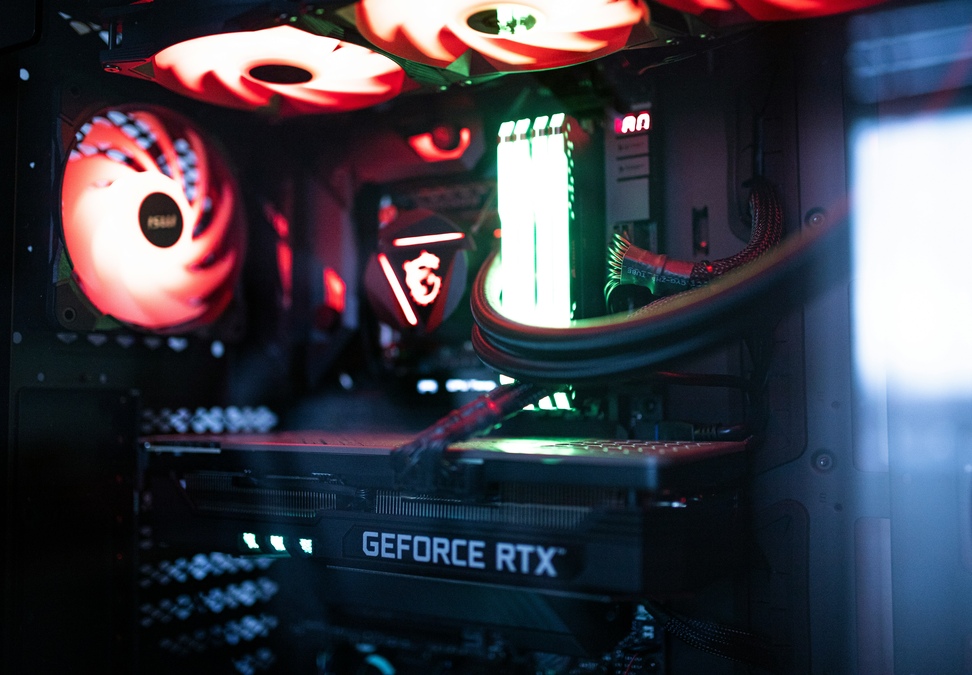
The NVIDIA RTX 5090 series is positioned as the best graphics card NVIDIA has ever released, combining extreme performance, next-generation AI features, and deep integration with GeForce Experience. With headline-grabbing RTX 5090 specs like 32 GB of GDDR7 memory and DLSS 4 support, expectations are sky-high. But beyond the specs and marketing, this review focuses on how the RTX 5090 actually performs in real-world gaming and creative workloads — and whether it truly deserves its flagship status.
This review follows what reviewers measured, what enthusiasts experienced, and what buyers should realistically expect—without marketing hype.
Architecture and Hardware: A True Technical Monster
The RTX 5090 is built on NVIDIA’s Blackwell architecture, which focuses heavily on AI-driven performance rather than traditional rasterization alone. It features a massive increase in CUDA cores compared to the RTX 4090, paired with faster and wider memory.
The biggest hardware upgrade is the 32 GB of GDDR7 memory on a 512-bit bus. This is not just a number for marketing. Critics agree that this memory configuration makes the RTX 5090 exceptionally capable in memory-heavy workloads like AI models, complex 3D scenes, and high-bitrate video timelines.
However, several reviewers note that NVIDIA is clearly designing GPUs with AI and future workloads in mind, not just gaming. This is important because it explains why gaming gains do not always scale proportionally with the hardware improvements.
Gaming Performance: Where the RTX 5090 Shines and Where It Doesn’t
4K Gaming: The Real Target
At 4K resolution, the RTX 5090 is undeniably the fastest GPU available today. Across modern AAA titles, most professional benchmarks show a 25–30 percent performance uplift over the RTX 4090.
In visually demanding games with ray tracing enabled, the difference becomes more noticeable. Games such as Cyberpunk 2077, Alan Wake 2, and Avatar Frontiers of Pandora benefit from the additional compute power and memory bandwidth.
That said, critics consistently point out that this uplift is not consistent across all games. Some titles show impressive gains, while others barely improve. This inconsistency frustrates some enthusiasts who expected a larger generational jump.
The honest takeaway is this:
The RTX 5090 delivers elite performance at 4K, but it does not redefine 4K gaming the way the RTX 4090 once did.
1440p and 1080p: Overkill in Practice
At lower resolutions, the RTX 5090 struggles to justify itself. Multiple reviewers highlight that at 1440p and especially 1080p, the GPU frequently hits CPU bottlenecks. In these scenarios, performance often looks very similar to the RTX 4090.
This has led to widespread agreement among critics:
The RTX 5090 is not designed for mainstream gaming resolutions.
Buying this card for anything below 4K gaming is not just excessive—it is inefficient.
DLSS 4 and AI Features: NVIDIA’s Biggest Advantage
DLSS 4 with Multi-Frame Generation is one of the most praised features of the RTX 5090. When supported, it can significantly boost frame rates while preserving image quality better than previous DLSS versions.
Critics often describe DLSS 4 as the reason the RTX 5090 feels more powerful than raw benchmarks suggest. In supported games, it can turn borderline-playable experiences into smooth, visually stunning gameplay.
However, honest reviews also point out the limitation:
DLSS 4 only matters if the game supports it.
Many reviewers caution buyers not to rely entirely on DLSS when evaluating the card’s value. It is an enhancement, not a replacement for raw performance.
Ray Tracing: Still NVIDIA Territory
Ray tracing performance is where the RTX 5090 clearly dominates its competitors. NVIDIA’s ray tracing efficiency, combined with DLSS, continues to outperform AMD’s offerings by a noticeable margin.
Critics agree that if ray tracing is a priority for you, NVIDIA still has no real competition at the high end. The RTX 5090 handles complex lighting, reflections, and shadows better and more consistently than any other consumer GPU.
Creative Workloads and AI: Where the RTX 5090 Truly Makes Sense
Many professional reviewers argue that the RTX 5090 makes more sense as a creative or AI card than a gaming upgrade.
The 32 GB of GDDR7 memory is extremely valuable for:
- 3D rendering and simulation
- 8K video editing
- Large AI models and inference
- Game development workflows
In these scenarios, the RTX 5090 delivers tangible productivity gains that justify its cost far more easily than gaming alone.
For creators and professionals, critics are far more positive about the RTX 5090 than for gamers.
Power Consumption and Efficiency: A Major Trade-Off
Power consumption is one of the most criticized aspects of the RTX 5090.
Under heavy load, it draws significantly more power than previous generations, often requiring a 1000 W or higher PSU. Reviewers repeatedly describe the card as powerful but inefficient.
Thermals are manageable with high-end cooling solutions, but sustained workloads can push temperatures and noise levels higher than many users are comfortable with.
This reinforces a recurring theme in reviews:
The RTX 5090 demands compromises in power, cooling, and system design.
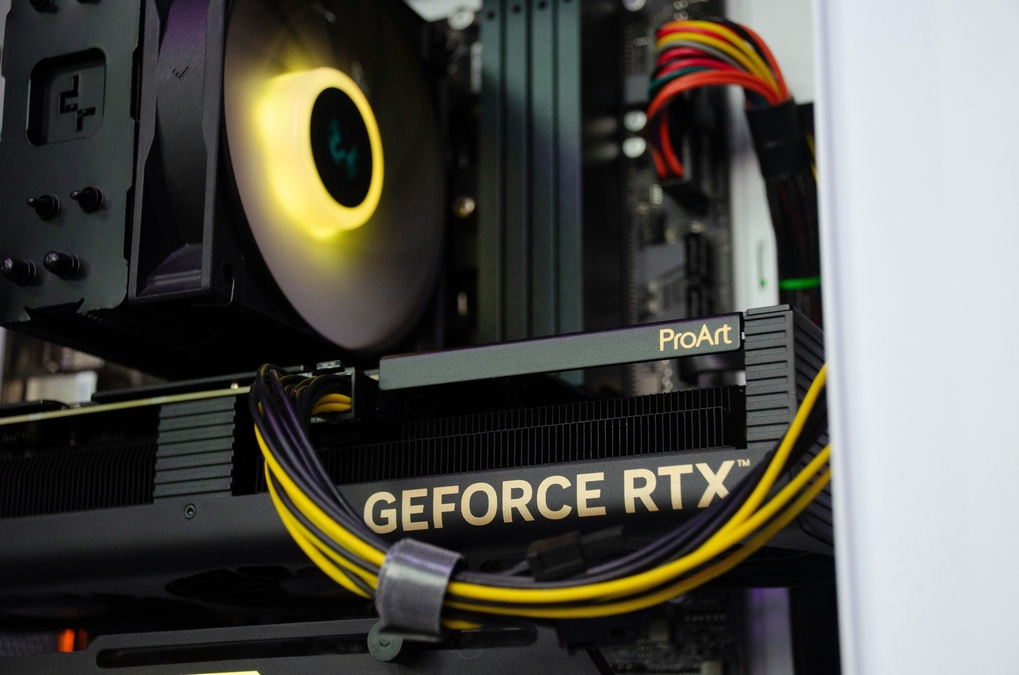
Build Quality, Reliability, and Early Issues
While most units perform as expected, some early batches suffered from minor manufacturing issues, including missing ROP units and isolated power connector concerns.
These problems are rare, but their existence has been acknowledged by NVIDIA and widely discussed by critics. For a flagship product at this price level, even rare issues damage confidence.
Most reviewers agree that current units are stable, but the launch was not flawless.
RTX 5090 vs Competitors: Realistic Comparison
| GPU | Strengths | Weaknesses |
| RTX 5090 | Best 4K gaming, best ray tracing, DLSS 4, huge VRAM | Extremely expensive, high power draw |
| RTX 4090 | Still excellent performance, better value | Less future-proof |
| RX 8900 XTX | Strong raster performance, cheaper | Weak ray tracing, no DLSS equivalent |
| Intel Arc | Good efficiency and pricing | Not competitive at high-end |
Critics widely agree that AMD offers better value for traditional gaming, but NVIDIA dominates when advanced features and ray tracing matter.
Who the RTX 5090 Is Actually For
Buy the RTX 5090 if:
- You play primarily at 4K or higher
- You rely on ray tracing and DLSS
- You work with AI or professional creative tools
- You want the best regardless of price
Avoid the RTX 5090 if:
- You already own an RTX 4090
- You play at 1440p or 1080p
- You care about efficiency and value
- You want noticeable gains per dollar
Final Verdict: Honest and Unfiltered
The NVIDIA GeForce RTX 5090 is the most powerful consumer GPU available today, but it is not a revolutionary gaming upgrade for everyone.
It excels at high-resolution gaming, ray tracing, and AI workloads, and it is unmatched in professional applications. However, its high price, power demands, and inconsistent generational gains make it a niche product rather than a universal recommendation.
For enthusiasts and professionals who want absolute performance and are willing to accept the trade-offs, the RTX 5090 delivers exactly what it promises. For most gamers, especially those already using high-end GPUs, better-balanced options may offer a smarter upgrade path.